
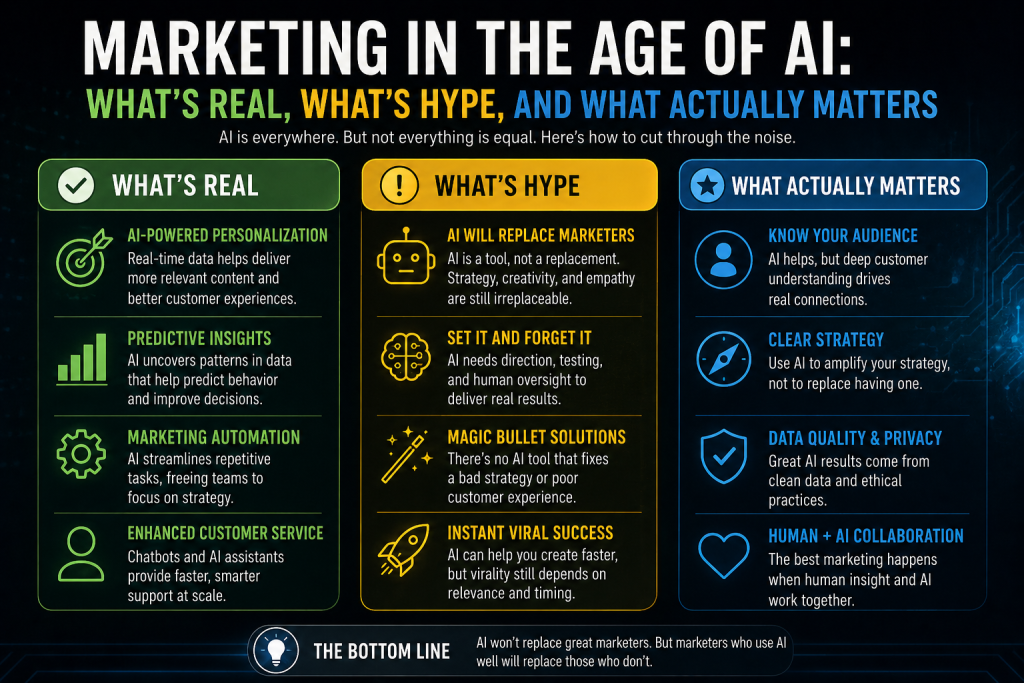
The field of digital marketing is being revolutionized at a speed few companies can handle. However, one thing many are reluctant to say is that the game remains the same. It’s the tactics that have changed.
Digital marketing has been transformed beyond recognition over the last couple of years. From automated content creation to AI-driven advertising, personalized communication, and actual conversational chatbots, there’s just too much to think about and process. However, if you find it challenging to cope with the amount of change, you are not alone.
So, where to begin? How to define AI in terms of digital marketing and separate what is essential from what is not?
What AI is Genuinely Good At?
First, let’s look at the genuine wins. AI is particularly adept at handling pattern recognition, fast-paced work, and large-scale operations — all those boring or slow things that we humans dislike. If deployed wisely, AI solutions can condense months of labor into mere hours.
Content at scale
Automate initial drafts, reuse lengthy articles, and create different iterations of ad copies in just minutes.
Targeted audience
Today’s AI-powered advertising platforms are incredibly accurate at predicting purchasing intentions, minimizing wastage.
Personalization
Email campaigns and websites that dynamically adapt to individual visitor behaviors in real-time.
What AI is not (yet) good at?
It’s time for some truth. AI-generated content that is not run through the gauntlet of human analysis tends to be subpar. It will be technically correct, coherent, and utterly bland. It lacks opinion. It lacks personality. It lacks knowledge about your brand and its unique voice, about your customers and their pain points.
The brands thriving by leveraging AI technology are not substituting for human ingenuity; they are augmenting it. AI does the grunt work, while humans do the thinking.
Deploy AI to perform extensive research, organize notes, and draft content. Human oversight and expertise can then ensure that your voice comes through loud and clear.
The SEO landscape is changing, here’s how to adapt
The fact that Google AI overviews and zero-click searches make fewer people click on sites for their queries is definitely an obstacle for content marketers. On the other hand, there is an opportunity in this challenge: the more complicated and sophisticated the question that your content will be able to solve, the less likely that this solution would come from any automated process.
Focus on knowledge and experience. Comprehensive guides, researches, unique opinions, and personal experience of the authors are becoming highly valued in this case.
Video and Voice: The channels AI is making accessible
Today, artificial intelligence-based video-making platforms enable brands to make high-quality videos at a much lower cost than before. The use of AI technology in making voice overs, auto captioning, and video editing is democratising the video-making process. Brands that previously shied away from using video marketing due to the costs and complexities involved will no longer have such barriers.
Another emerging trend in digital marketing is voice search. Voice search optimization is increasingly becoming as essential as keyword optimization.
What will never be automated? Relationship and Trust
In all the hoopla of AI, it is important to realize what cannot be replicated by AI. For instance, the telephone call where the account manager recalls that the client’s daughter is starting college. The handwritten thank you note. The case study jointly written with an ecstatic client. Human empathy at its best when a company handles a crisis.
AI won’t be able to deliver these experiences, nor does it have to. It simply needs to happen once in a while. In an era dominated by machines, a little humanity goes a long way.
Final Thoughts
But artificial intelligence is not going to replace the good marketers; rather, the marketers who harness AI capabilities will end up replacing the ones who haven’t. It’s not wise to fight against this transition or hand over control of your decision-making to it either. Instead, you must figure out what aspects of your process can benefit from AI assistance and where you must rely on being entirely human.
Novaria builds its strategy right at this point where intelligent systems meet human imagination.